

-33%


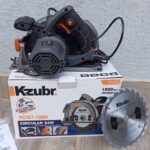
Kzubr circular saw 9 inch
Original price was: KSh 15,000.KSh 12,999Current price is: KSh 12,999.

Royce Cordless drill 21v
Original price was: KSh 15,000.KSh 8,750Current price is: KSh 8,750.
Royce 300s inverter welding machine
Original price was: KSh 20,000.KSh 13,500Current price is: KSh 13,500.
- MMA (Stick) Welding: This is its primary function. It’s designed for arc welding with coated electrodes (welding rods) across various metals like mild steel, stainless steel, and cast iron.
- Inverter Technology (IGBT): This is a key advantage. Inverter welders are:
- Compact and Portable: Much lighter and smaller than older, transformer-based welders, making them easy to carry around the workshop or job site.
- Energy Efficient: They convert power more efficiently, leading to lower electricity consumption.
- Stable Arc: Provide a very stable and smooth welding arc, which makes it easier for both beginners and experienced welders to achieve good results.
- Advanced IGBT technology: This specifically refers to the use of Insulated Gate Bipolar Transistors, which are power semiconductors crucial for the efficiency and stable output of inverter welders.
- 300 Ampere (A) Output: The “300s” signifies a maximum current output of 300 Amperes. For Royce models in this price range, this typically means:
- Current Range: Adjustable from approximately 20A up to 300A.
- Usable Electrode Diameter: Can handle a wide range of electrodes, typically from 1.6mm up to 4.0mm or even 5.0mm. This versatility allows it to weld various thicknesses of material.
- Important Note on Amperage: While advertised as 300A, the continuous working current might be slightly lower, especially at a high duty cycle. For most practical applications by hobbyists and light professionals, 300A provides ample power.
- High Duty Cycle: Some listings for the Royce 300S boast a “100% duty cycle at normal temperature” which is an impressive claim for an affordable machine. More realistically, for a professional setting, expect a good duty cycle like 60% at full current (300A) at a temperature of 40°C, meaning it can weld for 6 minutes continuously at 300A before needing 4 minutes to cool down. For most users, this is more than sufficient.
- Input Voltage: Designed for standard single-phase 220V-230V, 50-60Hz power, which is standard in Kenyan households and workshops.
- Protection Features: Common protective functions include:
- Overload Protection: Shuts down if the machine draws too much current.
- Overheating Protection: Prevents internal components from being damaged by excessive heat.
- Anti-Stick: Reduces the current if the electrode sticks to the workpiece, making it easier to remove.
- Hot Start: Provides a brief surge of current at the beginning of the weld to help establish the arc quickly and prevent sticking.
- Arc Force (or Dig): Helps maintain arc stability and prevents the arc from extinguishing, especially when the electrode is pushed into the molten puddle.
- Digital Display: Many models feature a digital display to accurately show the set welding current.
- Portability: Comes with a handle and often a shoulder strap, making it very easy to move around. Its weight is typically around 5-8 kg.
- Accessories: Usually includes a basic set of accessories:
- Electrode holder with cable
- Earth clamp with cable
- Sometimes a basic chipping hammer/wire brush and a simple welding face shield.
Ideal Use Cases:
- General Fabrication and Repairs: Excellent for welding steel, iron, and stainless steel in workshops, garages, and on-site.
- DIY Projects: Perfect for home improvement projects, metal art, and small construction tasks.
- Automotive Repairs: Suitable for various welding tasks on vehicles.
- Agricultural Repairs: Useful for fixing farm equipment.
Description
- MMA (Stick) Welding: This is its primary function. It’s designed for arc welding with coated electrodes (welding rods) across various metals like mild steel, stainless steel, and cast iron.
- Inverter Technology (IGBT): This is a key advantage. Inverter welders are:
- Compact and Portable: Much lighter and smaller than older, transformer-based welders, making them easy to carry around the workshop or job site.
- Energy Efficient: They convert power more efficiently, leading to lower electricity consumption.
- Stable Arc: Provide a very stable and smooth welding arc, which makes it easier for both beginners and experienced welders to achieve good results.
- Advanced IGBT technology: This specifically refers to the use of Insulated Gate Bipolar Transistors, which are power semiconductors crucial for the efficiency and stable output of inverter welders.
- 300 Ampere (A) Output: The “300s” signifies a maximum current output of 300 Amperes. For Royce models in this price range, this typically means:
- Current Range: Adjustable from approximately 20A up to 300A.
- Usable Electrode Diameter: Can handle a wide range of electrodes, typically from 1.6mm up to 4.0mm or even 5.0mm. This versatility allows it to weld various thicknesses of material.
- Important Note on Amperage: While advertised as 300A, the continuous working current might be slightly lower, especially at a high duty cycle. For most practical applications by hobbyists and light professionals, 300A provides ample power.
- High Duty Cycle: Some listings for the Royce 300S boast a “100% duty cycle at normal temperature” which is an impressive claim for an affordable machine. More realistically, for a professional setting, expect a good duty cycle like 60% at full current (300A) at a temperature of 40°C, meaning it can weld for 6 minutes continuously at 300A before needing 4 minutes to cool down. For most users, this is more than sufficient.
- Input Voltage: Designed for standard single-phase 220V-230V, 50-60Hz power, which is standard in Kenyan households and workshops.
- Protection Features: Common protective functions include:
- Overload Protection: Shuts down if the machine draws too much current.
- Overheating Protection: Prevents internal components from being damaged by excessive heat.
- Anti-Stick: Reduces the current if the electrode sticks to the workpiece, making it easier to remove.
- Hot Start: Provides a brief surge of current at the beginning of the weld to help establish the arc quickly and prevent sticking.
- Arc Force (or Dig): Helps maintain arc stability and prevents the arc from extinguishing, especially when the electrode is pushed into the molten puddle.
- Digital Display: Many models feature a digital display to accurately show the set welding current.
- Portability: Comes with a handle and often a shoulder strap, making it very easy to move around. Its weight is typically around 5-8 kg.
- Accessories: Usually includes a basic set of accessories:
- Electrode holder with cable
- Earth clamp with cable
- Sometimes a basic chipping hammer/wire brush and a simple welding face shield.
Ideal Use Cases:
- General Fabrication and Repairs: Excellent for welding steel, iron, and stainless steel in workshops, garages, and on-site.
- DIY Projects: Perfect for home improvement projects, metal art, and small construction tasks.
- Automotive Repairs: Suitable for various welding tasks on vehicles.
- Agricultural Repairs: Useful for fixing farm equipment.
Additional information
| Weight | 5 kg |
|---|
Reviews (0)
Related products


Original price was: KSh 16,000.KSh 15,500Current price is: KSh 15,500.
Buy via WhatsApp


Original price was: KSh 27,500.KSh 25,000Current price is: KSh 25,000.
Buy via WhatsApp

Original price was: KSh 65,000.KSh 60,000Current price is: KSh 60,000.
Buy via WhatsApp

Original price was: KSh 30,000.KSh 25,000Current price is: KSh 25,000.
Buy via WhatsApp

Original price was: KSh 7,000.KSh 5,500Current price is: KSh 5,500.
Buy via WhatsApp

Original price was: KSh 5,500.KSh 4,500Current price is: KSh 4,500.
Buy via WhatsApp


Original price was: KSh 8,000.KSh 7,000Current price is: KSh 7,000.
Buy via WhatsApp

Original price was: KSh 6,500.KSh 4,000Current price is: KSh 4,000.
Buy via WhatsApp

Original price was: KSh 3,000.KSh 1,800Current price is: KSh 1,800.
Buy via WhatsApp


Original price was: KSh 3,000.KSh 2,850Current price is: KSh 2,850.
Buy via WhatsApp


Original price was: KSh 2,500.KSh 1,700Current price is: KSh 1,700.
Buy via WhatsApp

Original price was: KSh 12,000.KSh 10,000Current price is: KSh 10,000.
Buy via WhatsApp
Reviews
There are no reviews yet.