

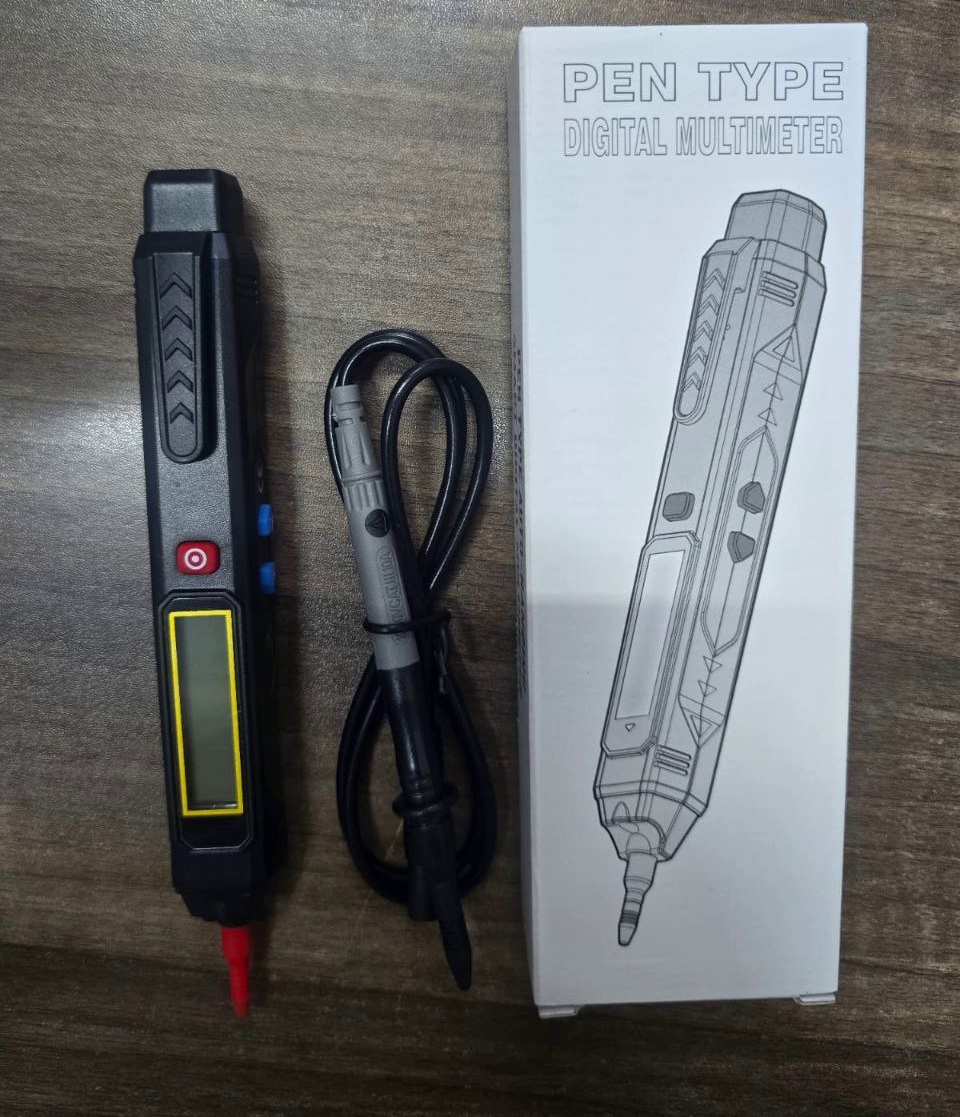
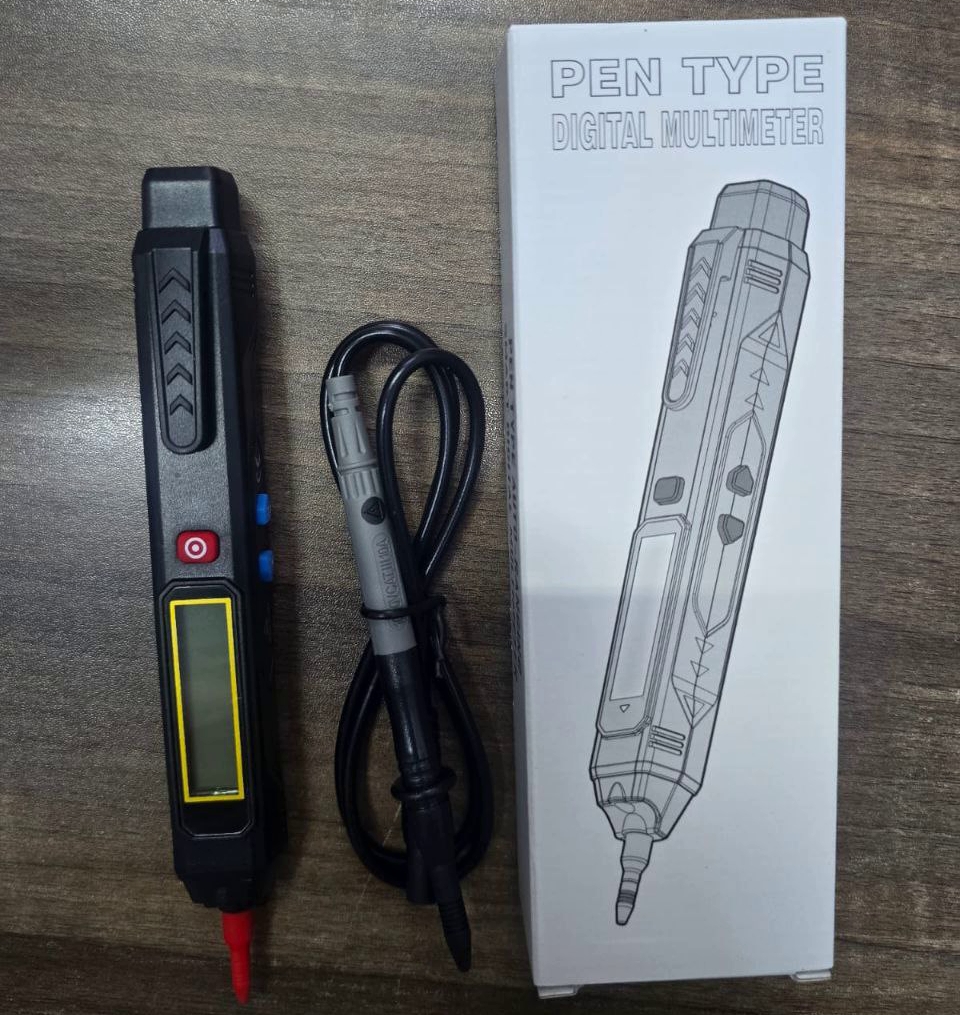

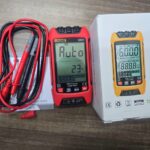
Pen type Digital multimeter
Original price was: KSh 3,000.KSh 1,850Current price is: KSh 1,850.
A pen-type digital multimeter is a compact, handheld electronic measuring instrument designed for convenience and portability, especially for on-the-go troubleshooting and quick electrical checks. Unlike traditional box-shaped multimeters that have two separate test leads, a pen-type multimeter integrates one test probe directly into the body of the meter, resembling a large pen.
How it Works
Like any digital multimeter (DMM), a pen-type DMM measures various electrical parameters by converting analog signals into digital readings displayed on an LCD screen. The internal circuitry, including analog-to-digital converters, resistors, and other components, processes the input signals.
The unique “pen” design means one probe (usually the positive/red probe) is integrated into the meter’s tip, while the other (negative/black probe) is connected via a short, flexible lead that plugs into a jack on the meter’s body.
Key Features and Functions
Pen-type digital multimeters typically offer a range of functions, making them versatile for electricians, hobbyists, and DIYers:
- Compact and Portable Design: Their primary advantage is their slim, lightweight form factor, making them easy to carry in a pocket, tool belt, or small kit.
- Ease of Use (One-Handed Operation): The integrated probe allows for one-handed operation, which is very convenient when working in tight spaces or holding onto something with the other hand.
- Digital LCD Display: Provides clear, precise numerical readings, eliminating the ambiguity of analog meters. Many include backlighting for dim environments.
- Auto-Ranging: Most modern pen-type multimeters feature auto-ranging, meaning the meter automatically selects the correct measurement range, simplifying operation and reducing the chance of incorrect readings. Some also offer manual ranging for specific applications.
- Common Measurement Functions:
- AC/DC Voltage (V): Measures the potential difference in a circuit. Ranges typically go up to 600V.
- Resistance (Ω): Measures electrical resistance.
- Continuity Test: Emits an audible beep (buzzer) if there’s a continuous electrical path (low resistance), useful for checking fuses, wires, and connections.
- Diode Test: Checks the functionality of diodes.
A pen-type digital multimeter is a compact, handheld electronic measuring instrument designed for convenience and portability, especially for on-the-go troubleshooting and quick electrical checks. Unlike traditional box-shaped multimeters that have two separate test leads, a pen-type multimeter integrates one test probe directly into the body of the meter, resembling a large pen.
How it Works
Like any digital multimeter (DMM), a pen-type DMM measures various electrical parameters by converting analog signals into digital readings displayed on an LCD screen. The internal circuitry, including analog-to-digital converters, resistors, and other components, processes the input signals.
The unique “pen” design means one probe (usually the positive/red probe) is integrated into the meter’s tip, while the other (negative/black probe) is connected via a short, flexible lead that plugs into a jack on the meter’s body.
Key Features and Functions
Pen-type digital multimeters typically offer a range of functions, making them versatile for electricians, hobbyists, and DIYers:
- Compact and Portable Design: Their primary advantage is their slim, lightweight form factor, making them easy to carry in a pocket, tool belt, or small kit.
- Ease of Use (One-Handed Operation): The integrated probe allows for one-handed operation, which is very convenient when working in tight spaces or holding onto something with the other hand.
- Digital LCD Display: Provides clear, precise numerical readings, eliminating the ambiguity of analog meters. Many include backlighting for dim environments.
- Auto-Ranging: Most modern pen-type multimeters feature auto-ranging, meaning the meter automatically selects the correct measurement range, simplifying operation and reducing the chance of incorrect readings. Some also offer manual ranging for specific applications.
- Common Measurement Functions:
- AC/DC Voltage (V): Measures the potential difference in a circuit. Ranges typically go up to 600V.
- Resistance (Ω): Measures electrical resistance.
- Continuity Test: Emits an audible beep (buzzer) if there’s a continuous electrical path (low resistance), useful for checking fuses, wires, and connections.
- Diode Test: Checks the functionality of diodes.
| Weight | 2 kg |
|---|
Related products


Reviews
There are no reviews yet.