

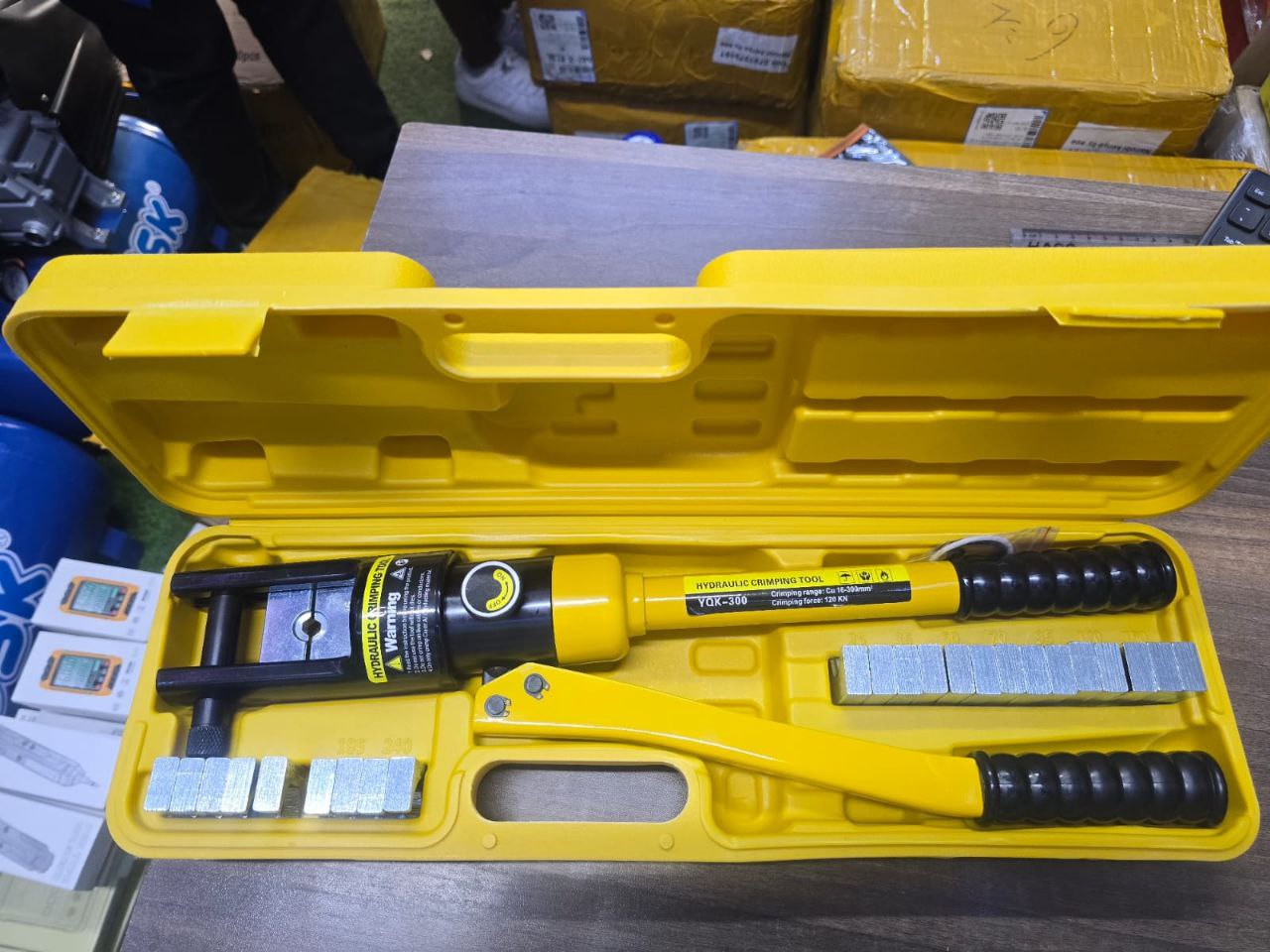
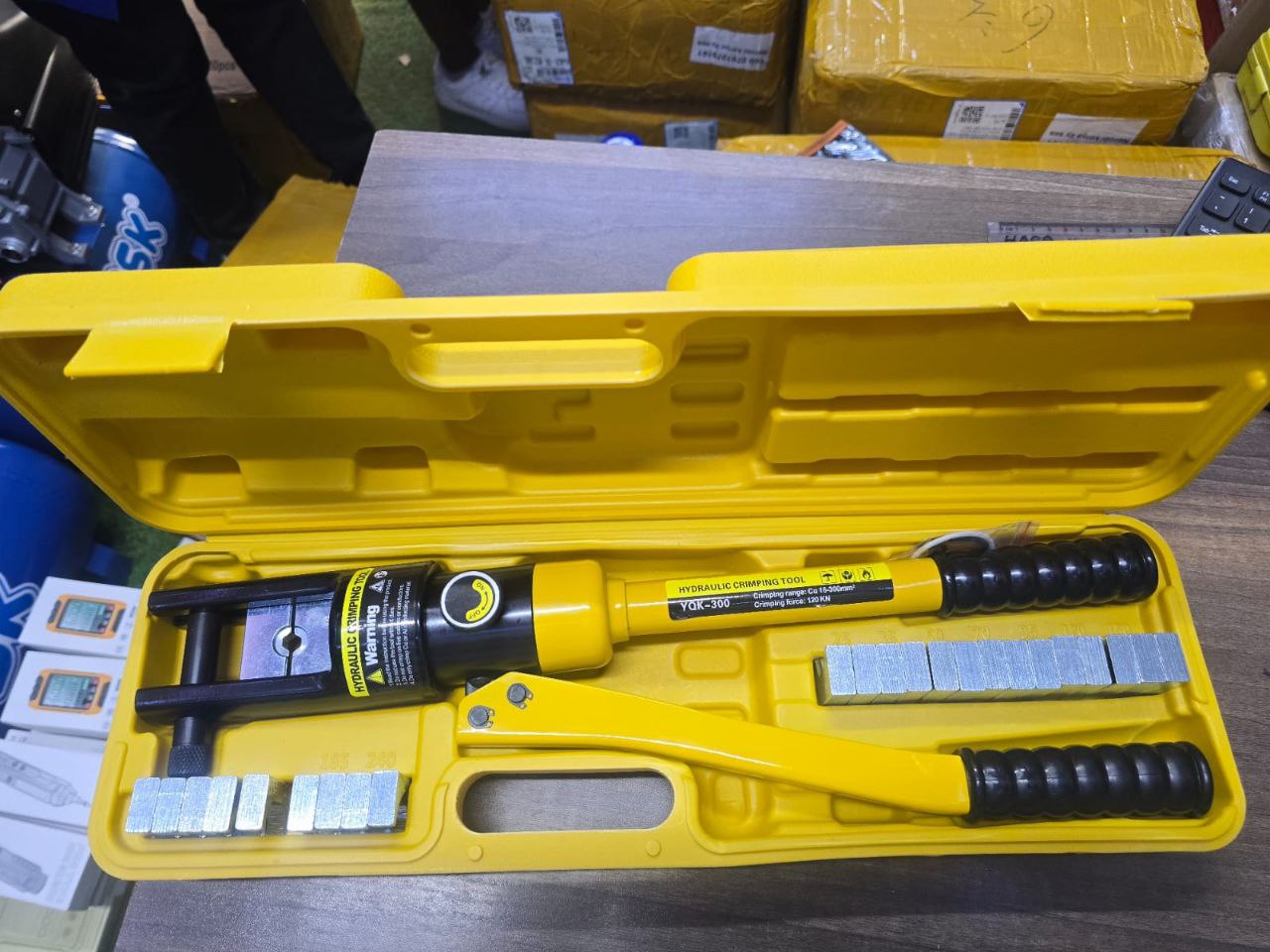
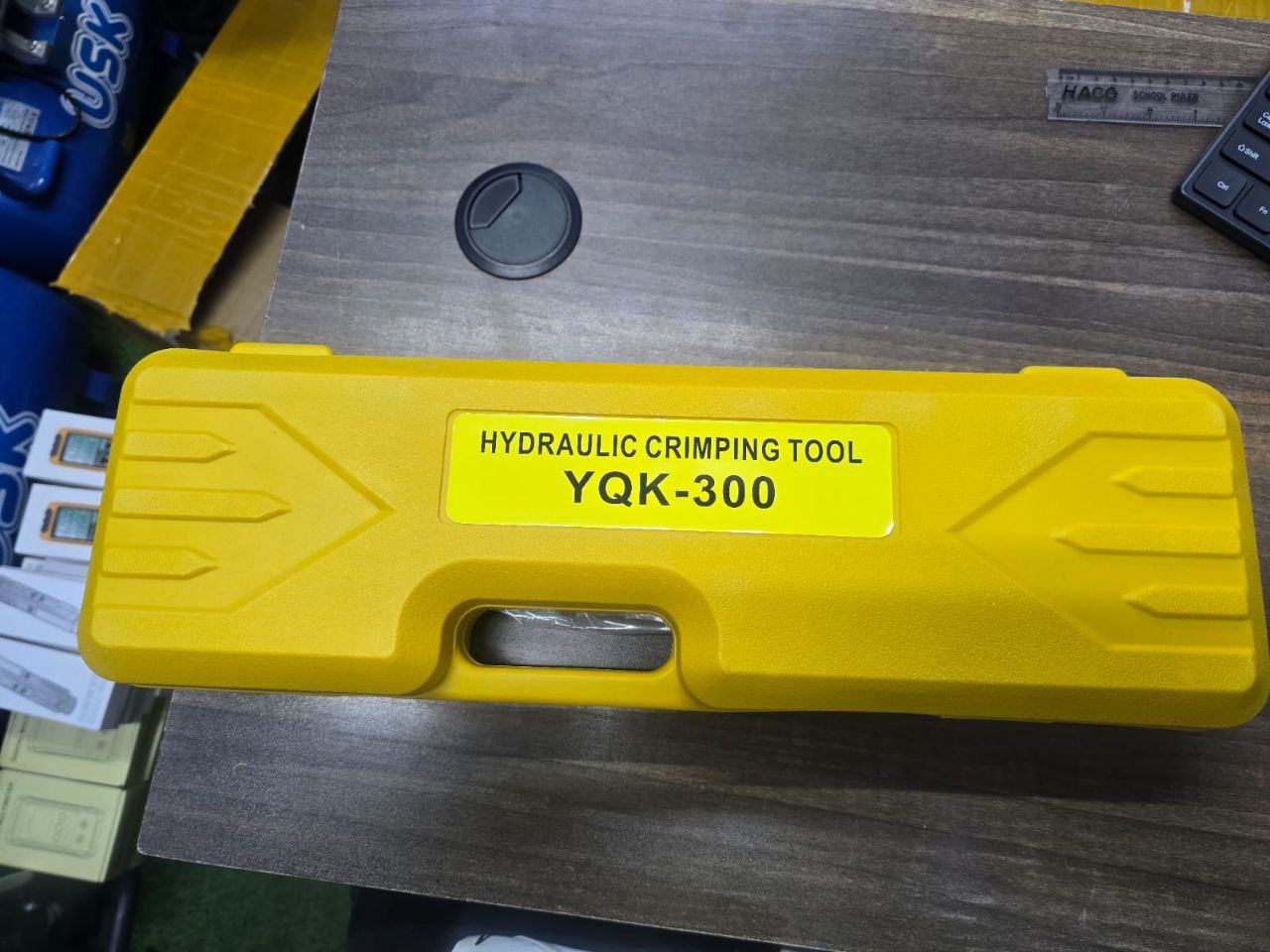
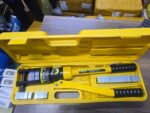
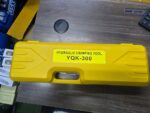
Hydraulic Crimping tool 16-300mm
Original price was: KSh 9,000.KSh 7,999Current price is: KSh 7,999.
- Crimping Range: As specified, 16-300mm². This means it comes with a set of interchangeable dies (usually 11-12 pairs) to accommodate various standard cable sizes within this range (e.g., 16, 25, 35, 50, 70, 95, 120, 150, 185, 240, 300 mm²).
- Crimping Force/Output: This is a critical specification, usually measured in tons or kilonewtons (kN). For the 16-300mm² range, typical crimping forces are around 12-16 tons (or 70-160 kN). Higher force ensures proper compression for larger gauges.
- Crimping Type: Most tools in this range perform hexagon crimping. This method compresses the lug uniformly around the conductor, providing excellent electrical contact and mechanical strength.
A hydraulic crimping tool for 16-300mm² cables is a heavy-duty, essential piece of equipment for electricians, linemen, and anyone working with large gauge electrical cables and terminals. The “16-300mm²” refers to the cross-sectional area of the copper or aluminum cables it’s designed to crimp, which covers a significant range from relatively smaller power cables to very large main distribution cables.
These tools utilize hydraulic pressure to exert immense force, ensuring a secure, low-resistance, and durable electrical connection. Manual crimpers simply wouldn’t be able to provide the necessary force for these larger cable sizes.
Key Features and Specifications
When looking for a quality hydraulic crimping tool in this range, consider the following:
- Crimping Range: As specified, 16-300mm². This means it comes with a set of interchangeable dies (usually 11-12 pairs) to accommodate various standard cable sizes within this range (e.g., 16, 25, 35, 50, 70, 95, 120, 150, 185, 240, 300 mm²).
- Crimping Force/Output: This is a critical specification, usually measured in tons or kilonewtons (kN). For the 16-300mm² range, typical crimping forces are around 12-16 tons (or 70-160 kN). Higher force ensures proper compression for larger gauges.
- Crimping Type: Most tools in this range perform hexagon crimping. This method compresses the lug uniformly around the conductor, providing excellent electrical contact and mechanical strength.
- Die Material and Quality: The dies are the heart of the crimper. They should be made from high-grade, hardened alloy steel (e.g., chrome-plated steel) to withstand immense pressure without deforming and to ensure precise crimps over time.
- Hydraulic System:
- Two-Speed Pump: A common feature where the pump quickly advances the ram (spindle) to close the dies, then automatically switches to a slower, higher-pressure mode for the actual crimp. This speeds up the process.
- Automatic Pressure Release (Safety Valve): Essential for safety and consistent crimps. Once the maximum crimping force is reached, an internal valve releases the pressure, preventing over-crimping and damage to the tool or the connection.
- Manual Pressure Release: A knob or lever to manually retract the ram at any point during the crimping cycle.
- Leak-free Design: Robust seals and connections in the hydraulic system prevent oil leaks.
- Head Design:
- 180° Rotatable Head: Allows the user to orient the tool and dies for easier access in tight or awkward spaces.
- Flip-Top or Open C-Head: Many tools in this range have a head that can open or flip, making it easier to insert large cables and lugs.
- Construction and Durability:
- Robust Body: The tool’s frame and components should be made from high-strength steel or durable alloys to withstand heavy-duty use.
- Ergonomic Grips: Comfortable, non-slip grips reduce operator fatigue, especially during extended use.
| Weight | 10 kg |
|---|
Related products


Reviews
There are no reviews yet.