


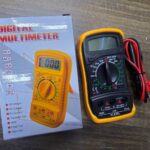
Heavy duty Digital multimeter
Original price was: KSh 2,000.KSh 1,350Current price is: KSh 1,350.
A digital multimeter (DMM) is a versatile electronic measuring instrument used to quantify various electrical properties. It’s an essential tool for electricians, electronics technicians, hobbyists, and anyone working with electrical circuits or devices. Digital multimeters have largely replaced older analog meters due to their higher accuracy, easier readability, and often a broader range of functions.
What a Digital Multimeter Measures:
A standard digital multimeter typically measures at least the “big three” electrical parameters, based on Ohm’s Law:
- Voltage (Volts – V):
- AC Voltage (VAC or V~): Measures alternating current voltage, like that found in wall outlets or mains power.
- DC Voltage (VDC or V-): Measures direct current voltage, found in batteries, solar panels, or electronic circuits.
- Current (Amperes – A):
- AC Current (AAC or A~): Measures the flow of alternating current.
- DC Current (ADC or A-): Measures the flow of direct current.
- Note: Measuring current usually requires the multimeter to be placed in series with the circuit, meaning the circuit must be broken and the meter inserted, which can be less convenient than voltage or resistance measurement. Some DMMs, especially professional ones, have dedicated jacks for milliamp (mA) or microamp (µA) measurements. For higher currents, a separate clamp meter is often used.
- Resistance (Ohms – Ω):
- Measures the opposition to the flow of current in a circuit or component. Useful for checking continuity, identifying short circuits, or testing resistors.
A digital multimeter (DMM) is a versatile electronic measuring instrument used to quantify various electrical properties. It’s an essential tool for electricians, electronics technicians, hobbyists, and anyone working with electrical circuits or devices. Digital multimeters have largely replaced older analog meters due to their higher accuracy, easier readability, and often a broader range of functions.
What a Digital Multimeter Measures:
A standard digital multimeter typically measures at least the “big three” electrical parameters, based on Ohm’s Law:
- Voltage (Volts – V):
- AC Voltage (VAC or V~): Measures alternating current voltage, like that found in wall outlets or mains power.
- DC Voltage (VDC or V-): Measures direct current voltage, found in batteries, solar panels, or electronic circuits.
- Current (Amperes – A):
- AC Current (AAC or A~): Measures the flow of alternating current.
- DC Current (ADC or A-): Measures the flow of direct current.
- Note: Measuring current usually requires the multimeter to be placed in series with the circuit, meaning the circuit must be broken and the meter inserted, which can be less convenient than voltage or resistance measurement. Some DMMs, especially professional ones, have dedicated jacks for milliamp (mA) or microamp (µA) measurements. For higher currents, a separate clamp meter is often used.
- Resistance (Ohms – Ω):
- Measures the opposition to the flow of current in a circuit or component. Useful for checking continuity, identifying short circuits, or testing resistors.
| Weight | 2 kg |
|---|
Related products


Reviews
There are no reviews yet.