


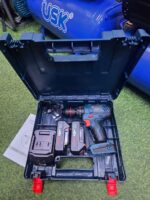
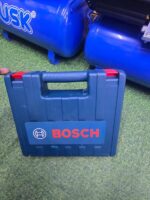


Bosch Cordless drill with hammer function
Original price was: KSh 9,000.KSh 6,750Current price is: KSh 6,750.
- Drill Mode: Functions like a regular drill, rotating the bit to create holes in softer materials like wood, plastic, metal, and drywall.
- Driver Mode: Utilizes a clutch mechanism to control torque, allowing you to drive screws to a consistent depth without overtightening or stripping screw heads. This is ideal for fastening screws into various materials.
- Hammer Drill Mode: This is the distinguishing feature. In this mode, the drill bit not only rotates but also provides a rapid, percussive “hammering” action along its axis. This rapid succession of short thrusts pulverizes the material, making it much easier and faster to drill into tough surfaces.
A cordless drill with hammer function, often called a combi drill or hammer drill/driver, is a highly versatile power tool that combines the capabilities of a standard drill driver with the added power of a hammer drill. This makes it an indispensable tool for both DIY enthusiasts and professional tradespeople.
Here’s a breakdown of what it is, what it’s used for, and key features to consider:
What is a Cordless Drill with Hammer Function?
At its core, it’s a battery-powered drill that can operate in three main modes:
- Drill Mode: Functions like a regular drill, rotating the bit to create holes in softer materials like wood, plastic, metal, and drywall.
- Driver Mode: Utilizes a clutch mechanism to control torque, allowing you to drive screws to a consistent depth without overtightening or stripping screw heads. This is ideal for fastening screws into various materials.
- Hammer Drill Mode: This is the distinguishing feature. In this mode, the drill bit not only rotates but also provides a rapid, percussive “hammering” action along its axis. This rapid succession of short thrusts pulverizes the material, making it much easier and faster to drill into tough surfaces.
What is it Used For?
The hammer function makes this type of drill ideal for:
- Drilling into Masonry: Concrete, brick, stone, and block are where the hammer function truly shines. It allows you to create holes for anchor bolts, concrete screws, wall plugs, and other fasteners with significantly less effort and time than a standard drill.
- Light Demolition: While not as powerful as a dedicated rotary hammer, a hammer drill can assist with light chipping or breaking of brittle materials.
- Versatility for Various Materials: Because you can switch off the hammer function, the same tool can be used for drilling into wood, metal, plastic, and driving screws. This versatility makes it a go-to tool for a wide range of projects, from hanging shelves to building decks or installing fixtures.
Key Features to Look For:
When choosing a cordless drill with hammer function, consider these factors:
- Power (Voltage – V):
- 12V drills: More compact and lightweight, suitable for lighter-duty tasks and working in tight spaces.
- 18V or 20V (Max) drills: The most common and versatile choice for general DIY and professional use, offering a good balance of power and portability.
- 24V or higher: Often found in heavy-duty or professional-grade models, providing maximum power for demanding applications.
- Battery Capacity (Ampere-hours – Ah):
- Higher Ah means longer run time on a single charge.
- Consider getting a kit with two batteries so you can have one charging while you use the other, minimizing downtime.
- Torque (Inch-pounds or Newton-meters):
- Torque is the rotational force the drill generates. Higher torque is better for driving large screws and drilling into tough materials.
- Look for an adjustable clutch to control torque, preventing overtightening or stripping screws.
- Blows Per Minute (BPM):
- This measures how many times the drill bit “hammers” per minute in hammer mode. Higher BPM means faster drilling in masonry. For effective hammer drilling, look for models with at least 25,000 BPM, with many top models offering 40,000+ BPM.
- Revolutions Per Minute (RPM):
- This indicates the rotational speed of the chuck. Higher RPM is better for drilling into wood and metal, while lower RPM (combined with higher BPM) is better for masonry.
- Look for multiple speed settings and a variable speed trigger for greater control.
- Chuck Size:
- Most common sizes are 1/2 inch (13mm) or 3/8 inch (10mm). A 1/2-inch chuck is more versatile and can accommodate a wider range of drill bits.
- Look for a keyless chuck for quick and easy bit changes. An all-metal chuck is generally more durable than plastic.
| Weight | 5 kg |
|---|


Reviews
There are no reviews yet.